Contents of Article
At the heart of an integrated sense of Self with significance and belonging is the capacity to both differentiate and connect.
Such differentiation and connection are founded in our ability to know our own inner worlds as unified yet unique with meaning, value, and worth.
Chele Yntema
Creating a Boundaried sense of Self: Differentiated yet Connected
So, what exactly does it mean to be differentiated yet connected, to be boundaried interpersonally in the manner by which we navigate our needs and the motivations, perceptions, interpretations, and actions that may arise from them?
Boundaries, as we are defining them here, are the natural limits through which our Self remains differentiated from an Other whilst connection continues. They are the felt contours through which we come to know where our own experience begins, where the experience of an Other begins, and how the two may meet with reciprocity.
Those contours form around our needs, and so the clarity we are reaching toward moves in two directions. Intrapersonally, a knowing of what we need. Interpersonally, a capacity to name it, to ask, and to remain our Self when the answer is no. Our core needs are not negotiable. How those needs come to be met is where the negotiation lives, and it is within that negotiation that a boundary takes its shape.
Though the totality of such a concept is beyond the scope of this article as it pertains to our very sense of being and belonging, here we shall begin by delving into the key concepts of what our core needs are and what they are not, reasonable and unreasonable expectations (as adults), what aspects are negotiable and what aspects are not negotiable, communicating needs with compassionate collaboration, as well as some key principles that can assist us along the way as we begin to develop who we are with another.
What are our Core Needs?
For those of us who grew up in less-than-ideal environments, particularly those of us who have experienced levels of relational or ambiguous trauma, knowing our core needs and even purely the concept of “needs” can be challenging.
Indeed, when the fulfilment of core needs is reliant on the ability of a primary caregiver and that caregiver does not (or cannot) nourish those essential needs, as humans we may begin to learn that our Self needs are not as valuable as an Other’s needs, that, in order to survive, the Other’s needs take priority over and above Self.
We may have learned that our core needs are unreasonable, or we may have even learned that to assert any of our needs creates a threat (such threat can be especially true of many authoritarian-based systems of familial or institutional interaction).
Quite often when such is the case, we innately embody a suppression of Self and instinctually meet the Other’s needs first, possibly not even knowing what our own needs are. This naturally creates the blurred and diffuse contours between Self and Other that give rise to friction and dissonance in relationship.
So how do we begin to become aware of and address this implicit movement toward putting the Other before the Self?
Whilst there is something to be said about working with a therapist to address some of the underlying fears that often awaken doubt and confusion, as abovementioned there is an essence of groundedness within knowing with clarity what our core needs actually are.
So, what are our core needs?
Innate Core Needs
Simply put, our core needs are those that are not negotiable as human beings.
These are the needs that underscore our innate survival based emotional-motivational circuits and the embodied mechanisms that ultimately influence our actions.
These needs are connection, protection, autonomy, and belonging with communicative meaning-making. More expressively:
Connection
Connection can be seen as that which establishes coherence and the fluid adaptive flows of integrated elements across time. Connection is the foundation to a sense of CARE and that something holds contextual continuity; it is the felt sense of making sense, a pleasant low affect and the safety that opens flourishing fulfilment.
In relation to our core needs connection is underscored by the neurobiological structures that hold a universal knowing of our innate needs for CARE. The affective and neuroceptive knowledge that propels the troubled youngling toward the caregiver in times of distress.
Proximity comes first and is the ground beneath connection. Long before there is anyone to be close to in any considered way, the body moves toward warmth, and an Other moves toward the body, and the two settle together. This is the embodied knowing that distress may be met, alive well before we have language for it.

Connection is what that proximity becomes once a Self is available to sense who is near and to reach with intention, the felt
continuity of being with an Other that
persists across time, across distance, and across absence.
In adulthood, with an integrated secure sense of Self, connection may be the connectedness one has to Self (and parts), the connectedness one holds to an Other (inclusive of Spiritual or Divine Others), as well as the connectedness one holds to the World (sociocultural embeddedness).
Protection
Protection can be seen as that which is the means or method of defending Self or an Other. It is the foundation to a sense of FEAR and the knowledge that one is not exposed to undue vulnerability, and when one is, that one has means to be shielded or guarded against the impending danger.
In relation to our core needs protection is underscored by the neurobiological structures that hold a universal knowing of our innate needs for safety. The affective and neuroceptive knowledge that propels flight, flock, frenzy, fight, force, ferociousness, freeze, freak, feign, and flop actions. Alarm comes first and is the ground beneath protection.
Where threat is sensed, the body organises toward survival without waiting for our permission, orienting, mobilising, or going still according to what the moment seems to allow.
This is the embodied knowing that danger is near, alive well before we have language for it. Protection is what that alarm becomes once a Self is available to appraise what is actually happening, the discernment through which we come to know what warrants our defending and what may safely be moved toward.
In adulthood, with an integrated secure sense of Self, protection may be the various modes of sensing-perceiving-interpreting and responding from a sense of Self (and parts), the discernment one brings to an Other (the knowing of who may be moved toward and who may be moved away from), as well as the balanced patterns of interaction one holds within the World (the systems, structures, and demands one meets whilst remaining free from threat).
Autonomy
Autonomy can be seen as the quality of self-governance that allows the Self to attain intrinsic or value-based needs and desires. It is the foundation to a sense of interdependence and the knowledge that one can act in one’s own agency and in alignment with one’s own volition.
In relation to our core needs autonomy is underscored by the neurobiological structures that hold a universal knowing of our innate needs for agency. The affective and neuroceptive knowledge that propels frustration and annoyance and the predisposition of RAGE based activation toward fight, force, or ferociousness.
Agency comes first and is the ground beneath autonomy. Where SEEKING is thwarted and our freedom of action is curtailed, RAGE arises. This is the embodied knowing that we are the author of our own movement, alive well before we have language for it. Autonomy is what that agency becomes once a S
elf is available to appraise its own action against what matters, the inner endorsement of what we do as arising from and belonging to us.

In adulthood, with an integrated secure sense of Self, autonomy may be the freedom and agency to act with choice and self-determination from a sense of authenticity and empowerment within Self (and parts), the capacity to remain the author of o
ne’s own action alongside an Other (whilst connection continues), as well as the volition to move within the World (the roles, obligations, and expectations one may come to endorse as one’s own).
Belonging with Communicative meaning-making
Whilst belonging can be seen as a sense of orientation toward another that allows the Self to remain protected and connected, belonging cannot occur without a sense of Self being resonantly seen, heard, understood, accepted, valued, and delighted in by an Other. Such a sense only occurring through implicit and explicit means of communicative meaning-making, where the Other reflects the Self and the Self reciprocates, which in turn is reflected by the Other in care.
In relation to our core needs belonging with communicative meaning-making is underscored by the neurobiological structures that hold a universal knowing of our innate needs for mourning and meaning.
The affective and neuroceptive knowledge that propels the activation of PANIC/GRIEF and the orientation toward an Other in times of confusion and loss. Separation distress comes first and is the ground beneath belonging. Where the Other is gone, the body cries out, and the crying out is itself the first communication, a signal sent into the space between in the hope that something answers. This is the embodied knowing that we are not made to be alone, alive well before we have language for it. Belonging is what that distress becomes once a Self is available to be recognised and to recognise in return, the reciprocal meaning-making through which we come to have a place that continues whether or not the Other is presently in the room.

In adulthood, with an integrated secure sense of Self, belonging with communicative meaning-making may be the sense that Self makes sense (and that parts may be known), the embodied sense of being with an Other (resonantly seen, heard, understood, accepted, valued, and delighted in), as well as the sense of being in the World with direction and purpose (a place among others that continues across time).
With these core needs defined, it may be here necessary to rearticulate that, where we have grown up in environments that were less than secure, the embodied sense of Self as significant and worthy of connection, protection, autonomy, and belonging with communicative meaning-making forms unevenly.
What tends to form alongside it is an insecure and dissonant sense of mistrust and fear when connecting to Self, Other, or the World (known as insecure attachment). This is territory that asks for the additional support of a therapeutic Other who will work alongside you in coming to know your authentic sense of Self and the innate needs that went unmet, neglected, or abused.
With this in mind, we move to name what the above outlined core needs might look like in adulthood, and what they certainly do not look like, and, further on, what they are not. It may be important here, should a sense of fear, anger, or grief arise from the times where these needs have gone unmet within relationships, to take the time to pause and acknowledge those losses with compassion. Perhaps even taking a compassionate moment to come back to Self if you find yourself moved beyond your Window of Capacity.
10 Reasonable Human Needs in Relationship
These ten needs are the four core needs as they take shape between two adults. Respect, equality, and safety are protection. Being seen, heard, understood, accepted, valued, and delighted in is belonging. Space, uniqueness, expression, and consent are autonomy. And clarity, continuity, consistency, and stability are what connection feels like once it can be relied upon.
Some of these may come close. If something in you recognises itself here, that recognition is information, and it may be worth pausing there before reading on.
- To be treated with respect and dignity.
- To be treated with equality.
- To feel seen, heard, understood, accepted, valued, and delighted in.
- To feel a sense of clarity, continuity, consistency, and stability.
- To be and feel safe from physical, psychological, sexual, spiritual, financial, and/or technological abuse.
- To be and feel safe from coercion and control including subtle forms of discrimination, oppression, and/or suppression through uses of role, status, collective, or systemic forms of power.
- To be free to be alone (space and time to Self).
- To be free to be one’s unique sense of Self without that uniqueness being demeaned, disparaged, denigrated, dismissed, or devalued in any way.
- To be free to communicate one’s desires, yearnings, wishes, or wants.
- To know that both Self and Other are free to say “no” and that that no shall be heard and respected without resentment or repercussion (consent).
In highlighting these very reasonable human needs we move into the nuances that underscore all adult relationships.
By adult relationship we mean two equal human beings coming together with the assumed knowledge that neither are now dependent (as in the caregiver-youngling relationship).
The Nuances: What is not a need in adult relating
The paradox of adult relating is that sometimes other human beings will not be willing or able to meet our core needs within the relationship. The needs themselves remain reasonable throughout. Indeed what we might begin to name as a reasonable expectation in relationship circles us back to the above outlined list, and the knowledge, that as Hailey Magee, author of Stop People Pleasing and Find your Power, states:
In these cases, it’s important to remember: Others’ inability to meet our needs doesn’t immediately make our needs unreasonable or “too much.” Sometimes, it just means that, like two puzzle pieces whose edges don’t align, our needs are not compatible right now.
From here, it’s up to us to decide what boundaries we need with those who can’t or won’t meet our reasonable needs.
Therefore, we note that a need is not the following:
1. That the other fulfil your needs
In line with this it is important to know that whilst our core needs are not negotiable, how we meet those needs are.
Indeed, this is where our capacity to know and to communicate, without the expectation that the other must fulfil our requests, what it is we are thinking, feeling, what our need is, and how the other may be able to support us in fulfilling those needs. And whilst communication is a learned skill in its own right, it is a skill that opens the space between us rather than one that obliges an answer from it.
2. That the other agree with you
Two adults coming together bring two histories, two sets of meanings, and two ways of sensing what matters. Agreement is one possible outcome among many, and it is not the ground on which the relationship stands. As highlighted by the Gottman Institute, lasting relationships require flexibility, a solid friendship, and the knowledge that friction and conflicts are inevitable. The work is in disagreeing well, which asks that both remain curious about the Other’s meaning whilst our own remains available to us. What we may reasonably ask for is to be heard. Whether we are agreed with belongs to the Other.
3. That the other never rupture the connection
Rupture is woven into every relationship that lasts, arising through misattunement, tiredness, distraction, and the ordinary friction of two separate beings meeting. What is reasonable is not a relationship without rupture. It is the knowing that no matter the rupture, both are willing and wanting to repair and to spend time in compassionate collaboration working through and solving the issues at hand. Indeed, it is within repair that trust is built, since a connection that has ruptured and returned has shown us something a connection that has never been tested cannot.
Vitally here, we add the caveat that when requests for our reasonable needs to be met is met with threat, coercion, or means of control via demeaning, disparaging, denigrating, dismissing, or devaluing actions in any way it is imperative to find support from an Other who can assist you in exiting the relationship safely.

Consequently, and quite paradoxically we note that, should you be in a relationship where fear dominates, it is reasonable that this may be a situation that is hard to simply “choose to set a boundary” within. Seeking compassionate and safety-based support in these times may just be the connection and protection essential in re-establishing a sense of Self autonomy and the ability to change your situation.
With this articulated, we have added some resources below to reference more of the “how” we might achieve compassionate collaboration and a sense of internal clarity of reasonable and unreasonable expectations. Importantly it may be that we need additional support or a mutual sounding board (a therapist) to help us work through some of the seemingly intractable differences we have.
Interpersonal interaction is not an easy feat, especially if we have grown up in environments where the development of our sense of Self was not facilitated through connection, protection, autonomy, and communicative meaning-making. Remember, we cannot know what we do not know unless we are supported in knowing the unknowns. We cannot become differentiated and connected beings without the security formed when the expression of our very being is
met with the intentional and resonant modulation (by the primary caregiver) that has allowed for the emergence of an internal sense of trust
in the Self as resonantly seen, heard, understood, accepted, valued, and delighted in (the foundation of secure infant attachment).
Some Key Principles to Remember
It is essential to keep in mind that expectations within adult relationships are far different to what is reasonable in childhood when we are dependent on the caregiver for survival.
-
- Self and Other needs both matter, and both may be met.
- As adults we have Self responsibility and accountability for our own thoughts, feelings, and needs, you can read more about these terms here.
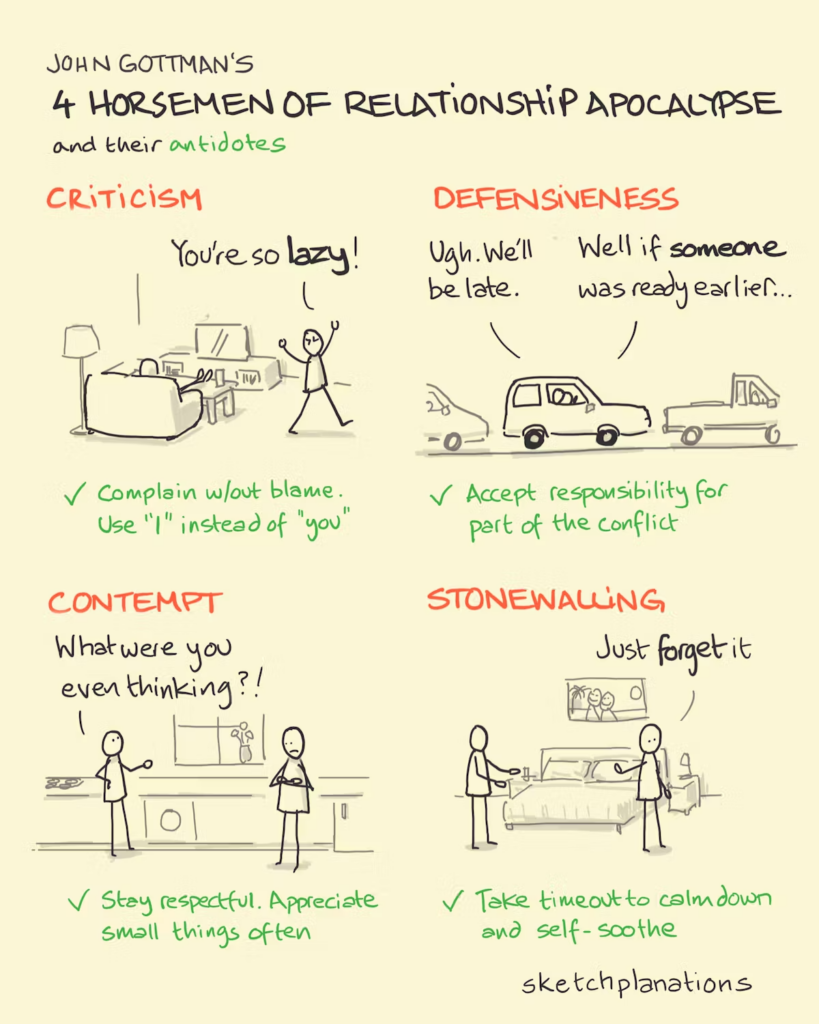
- Communication is the crucial key. Be aware of the Four Horsemen.
- It takes time and trust, appreciation and approach, reciprocity and repair.
Resources to Support You
The Four Horseman
Needs explained
More from Hailey Magee
Here’s why trying to “reason your way” out of boundary guilt isn’t working—and here’s what to do instead:
Telling a people-pleaser they “shouldn’t feel guilty” about setting a boundary is like telling someone they “shouldn’t feel anxious” when they’re anxious.
It doesn’t actually help.
Many people-pleasers intellectually believe that it’s okay to put their needs first, but emotionally, the thought of setting a boundary fills them with the heavy sludge of guilt—and no amount of logic, reason, or “you deserve better!” seems to make a dent in it.
In this article, I’ll explain the scientific reasoning behind why your guilt may be resistant to reason, logic, and positive thinking—and share what actually helps instead. (Hint: It has to do with your nervous system!)
Access the post HERE
This boundary advice is secretly destroying your relationships:
But as it turns out, most social media advice about boundaries favors rigid, uncompromising guidance that’s very useful for toxic relationships—but can quickly destroy healthy relationships.
Toxic relationships typically require firm and unapologetic stances; healthy relationships typically require grace, flexibility, and fluidity. When we set boundaries in healthy relationships as if they were toxic relationships, we erode trust, create unnecessary distance, and inhibit opportunities for change and repair. When we set boundaries in toxic relationships as if they were healthy relationships, we lose ground, get overridden by others’ negative reactions, and expose ourselves to further hurtful treatment.
Here are some helpful guidelines for discerning when to be flexible and fluid, and when to be firm and uncompromising.
Access the post HERE
More from The Gottman Institute
Five steps to fight better if your relationship is worth fighting for:
Conflict is inevitable in every relationship. Psychologist Dan Wile says it best in his book After the Honeymoon: “When choosing a long-term partner, you will inevitably be choosing a particular set of unresolvable problems.” However, Dr. Gottman has found that nearly 1/3 of all conflicts can be resolved with the right approach.
The popular approach to conflict resolution, advocated by many marriage therapists, is to put yourself in your partner’s shoes, listen to what they say, and communicate with empathy that you understand their perspective. It’s a decent method if you can do it.
But most couples can’t. Even happily married couples. After studying couples for the last 40 years, Dr. John Gottman has recognized that even happy couples do not follow the experts’ rules of communication.
By studying what these couples did, Dr. Gottman developed a new model for solving your solvable problems in an intimate relationship.
Access the post HERE
The Four Horsemen: Criticism, Contempt, Defensiveness, and Stonewalling:
The Four Horsemen of the Apocalypse is a metaphor depicting the end of times in the New Testament. They describe conquest, war, hunger, and death respectively. We use this metaphor to describe communication styles that, according to our research, can predict the end of a relationship.
Access the post HERE
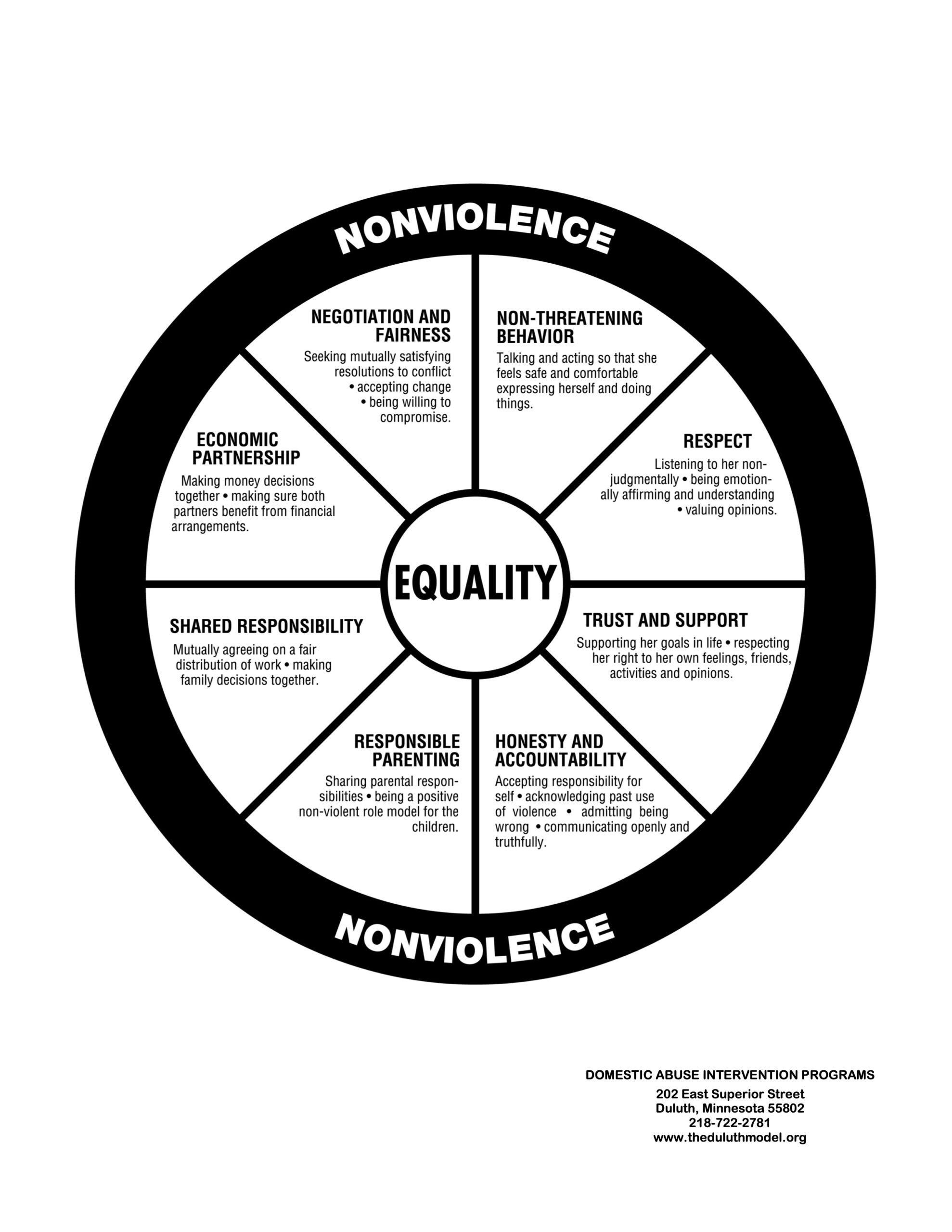
Power & Control Vs Equality
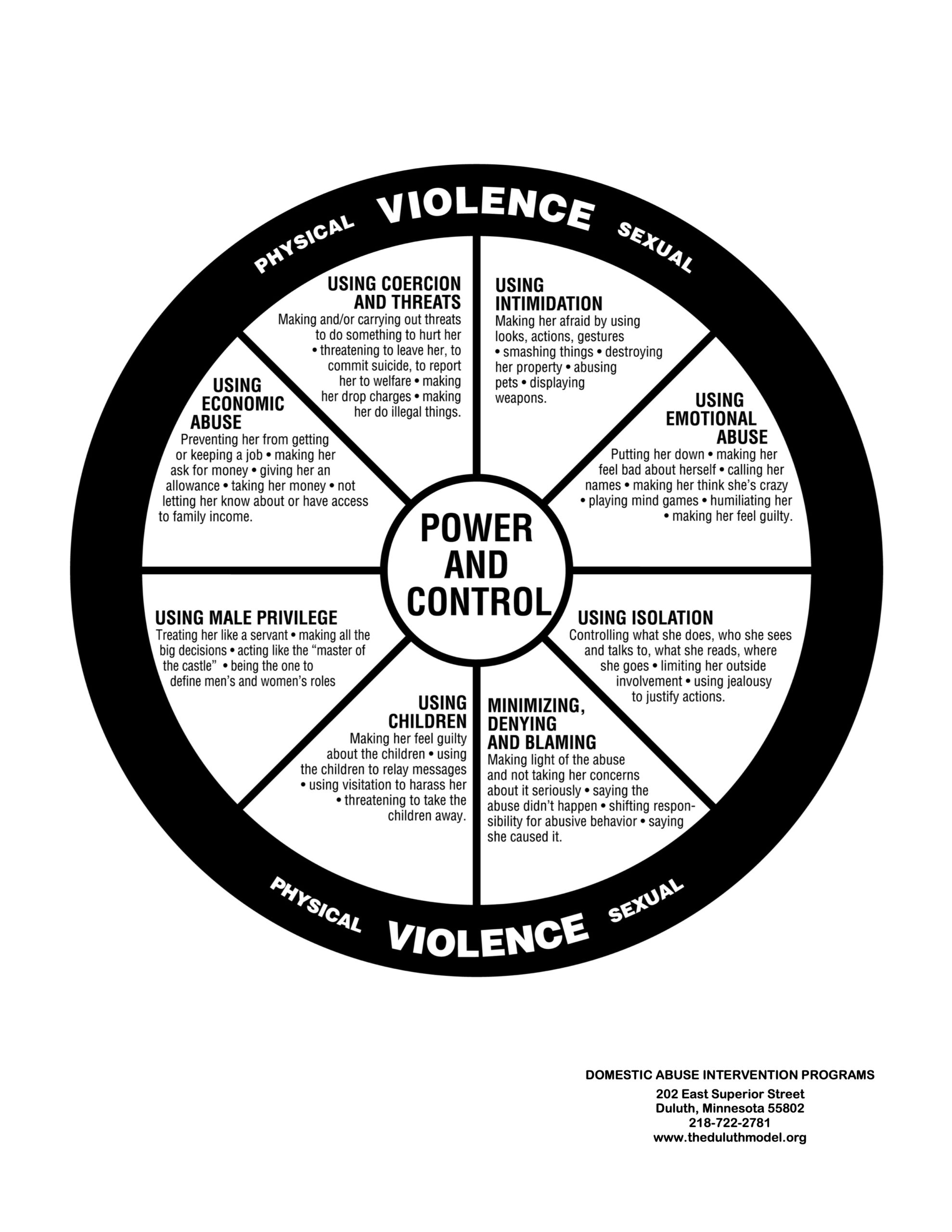
Understanding the Power and Control Wheel:
Physical and Sexual Violence (outer ring)
Using Intimidation
Using Emotional Abuse Using Isolation Minimizing, Denying and Blaming
Using Children
Using Male Privilege
Using Economic Abuse
Using Coercion and Threats
Access the information HERE
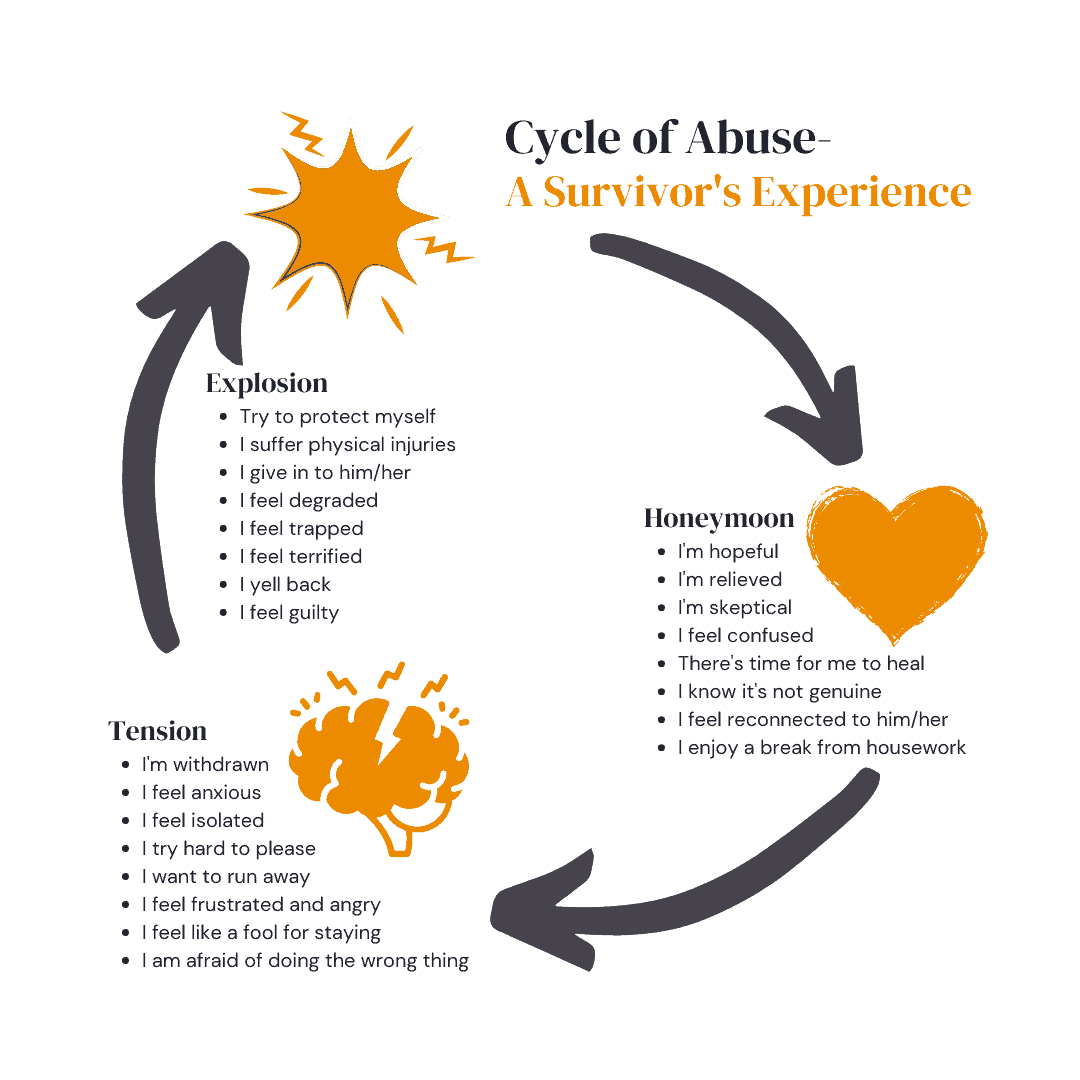
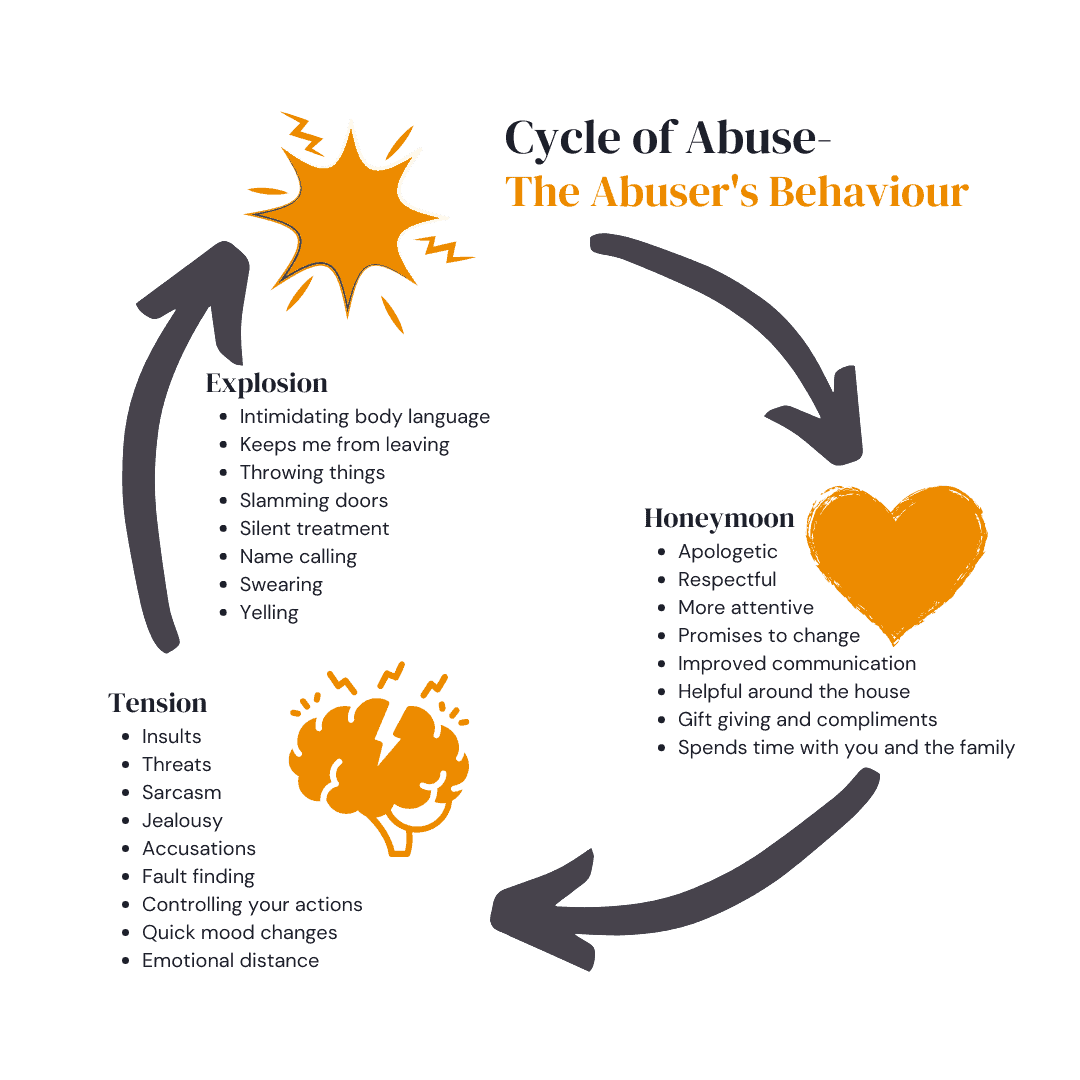
Cycle of Abuse:
Research has shown that there is a distinctive cycle to domestic abuse. Although every relationship is different, commonalities can be seen. There are three different phases: the honeymoon phase, the tension-building phase, and the explosion phase. The entire goal for this cycle is to keep the survivor on edge and to obtain power and control over the relationship.
Access the information HERE
If you are unsure or are experiencing indicators of Domestic and Family Violence the following services can provide crisis support or information:
In an emergency, call Triple Zero (000)
1800respect
DFV 24/7 Helpline
Ph: 1800 737 732
Online Chat
https://chat.1800respect.org.au/#/welcome
Find Services
https://www.1800respect.org.au/services
Kids Help Line
24/7 Helpline
Ph: 1800 55 1800
Web Chat
https://kidshelpline.com.au/get-help/webchat-counselling
Email
counsellor@kidshelpline.com.au
For Parents
https://kidshelpline.com.au/parents
Website
https://kidshelpline.com.au
Mens Referral Service
Counselling
Ph: 1300 766 491
Find Information
https://ntv.org.au/get-help/
Elder Abuse Prevention Unit
Helpline
Ph: 1300 651 192
Find Information
https://www.eapu.com.au/
White Ribbon Australia
Find Information
https://www.whiteribbon.org.au/
Welcome, my name is Chele, I am a therapist primarily specialising in Trauma – specifically as it presents as Burnout and Breakdown. As a psychotherapist & PACFA & CCAA Clinical Counsellor I work individually with beautiful humans such as yourself who feel alone, lost, confused, & overwhelmed; those of you who are longing for something different.
As such, I offer my knowledge, skills, and inherent gifts with ears that listen to hear, and a heart open to receive who you are, no matter the suffering you bring; to support you in an exploration of how your past has impacted you and the ways that shows up presently. Together we will rediscover your hope and your sense of Self; we will reconnect you to what matters reclaiming the joy and delight in life you so deserve.
I welcome you to view my services or connect with me to explore how I can assist you in your journey.

References & Resources
Benson, K. (2021). 5 steps to fight better if your relationship is worth fighting for. The Gottman Institute. https://www.gottman.com/blog/5-steps-to-fight-better-if-your-relationship-is-worth-fighting-for/
This resource supports the article’s articulation of rupture and repair as ordinary features of adult relating. It is especially useful for readers seeking practical steps within conflict, and for the understanding that a proportion of relational difficulty remains perpetual rather than solvable.
The Bowen Center. (n.d.). Differentiation of self. The Bowen Center for the Study of the Family. https://www.thebowencenter.org/differentiation-of-self
This resource supports the article’s central pairing of differentiation and connection. It is especially useful for the language around remaining a separate Self whilst emotional closeness with an Other continues.
Brittle, Z. (2024). U is for understanding. The Gottman Institute. https://www.gottman.com/blog/u-is-for-understanding/
This resource supports the article’s distinction between being heard and being agreed with. It is especially useful for the movement from persuasion toward curiosity about the Other’s meaning.
Deci, E. L., & Ryan, R. M. (1987). The support of autonomy and the control of behavior. Journal of Personality and Social Psychology, 53(6), 1024–1037. https://doi.org/10.1037/0022-3514.53.6.1024
This paper supports the article’s definition of autonomy as the mature capacity that emerges from agency. It is especially useful for the framing of autonomy as an inner endorsement of one’s actions, the sense that they emanate from oneself and are one’s own, rather than as independence from an Other.
Domestic Abuse Intervention Programs. (n.d.). Wheels. The Duluth Model. https://www.theduluthmodel.org/wheels/
This resource is the original source of the Power and Control Wheel and the Equality Wheel reproduced in this article. It is especially useful for naming the specific tactics of coercion and control, and it was developed in partnership with women who had survived them.
The Family Systems Institute. (n.d.). Definitions from Bowen theory. https://www.thefsi.com.au/definitions-from-bowen-theory/
This resource supports the article’s use of differentiation as a systemic rather than individual property. It is especially useful for the language around emotional fusion and the intergenerational transmission of relational patterning.
Gerlach, P. K. (n.d.). Do you REALLY know what you need? [Video]. YouTube. https://www.youtube.com/watch?v=rryc1nLjCd0
This resource supports the article’s premise that knowing our own needs is itself a developmental achievement. It is especially useful for readers who recognise the experience of not knowing what they need.
Gray, H. (2024). Why you need to accept your partner’s needs. The Gottman Institute. https://www.gottman.com/blog/why-you-need-to-accept-your-partners-needs/
This resource supports the article’s claim that our core needs are not negotiable whilst how those needs are met remains open. It is especially useful for the shift from requiring that a need be met toward communicating what the need is.
Lisitsa, E. (2023). The four horsemen: Criticism, contempt, defensiveness, & stonewalling. The Gottman Institute. https://www.gottman.com/blog/the-four-horsemen-recognizing-criticism-contempt-defensiveness-and-stonewalling/
This resource supports the article’s key principle that communication is the crucial key. It is especially useful for recognising the four patterns that reliably foreclose repair.
Magee, H. (2024a). Here’s why trying to “reason your way” out of boundary guilt isn’t working—and here’s what to do instead. Hailey Magee. https://www.haileymagee.com/blog/you-cant-logic-your-way-out-of-guilt
This resource supports the article’s recognition that knowing a need is reasonable does little to settle the affect that arises when we voice it. It is especially useful for readers whose guilt has proven resistant to reason.
Magee, H. (2024b). This boundary advice is secretly destroying your relationships. Hailey Magee. https://www.haileymagee.com/blog/2023/9/25/this-boundary-advice-is-secretly-destroying-your-relationships
This resource supports the article’s nuance that a boundary takes its shape within the relationship it is set in. It is especially useful for discerning where flexibility serves connection and where firmness serves safety.
New York State. (n.d.). What does a healthy relationship look like? https://www.ny.gov/teen-dating-violence-awareness-and-prevention/what-does-healthy-relationship-look
This resource supports the article’s list of reasonable human needs in relationship. It is especially useful as a plainly worded reference point for readers who are uncertain whether what they are experiencing is ordinary.
Panksepp, J. (2010). Affective neuroscience of the emotional BrainMind: Evolutionary perspectives and implications for understanding depression. Dialogues in Clinical Neuroscience, 12(4), 533–545. https://doi.org/10.31887/DCNS.2010.12.4/jpanksepp
This paper supports the article’s grounding of each core need in a primary-process emotional system. It is especially useful for the language around CARE, FEAR, RAGE, and PANIC/GRIEF as evolved subcortical systems, and for the observation that RAGE is aroused where SEEKING is thwarted and freedom of action is curtailed (p. 538).
Siegel, D. J. (2020). The developing mind: How relationships and the brain interact to shape who we are (3rd ed.). Guilford Press.
This text supports the article’s understanding of a boundaried Self as an integrated Self. It is especially useful for the language around integration as the linkage of differentiated elements, and for the recognition that differentiation and connection are the two movements of one process rather than opposing forces.
Stern, D. N. (1985). The interpersonal world of the infant: A view from psychoanalysis and developmental psychology. Basic Books.
This text supports the article’s placement of agency as prior to autonomy. It is especially useful for the naming of self-agency as one of the invariants constituting the core sense of Self, alongside self-coherence, self-affectivity, and self-history.
Women Against Abuse. (2025). Types of abuse. https://www.womenagainstabuse.org/education-resources/learn-about-abuse/types-of-domestic-violence
This resource supports the article’s naming of physical, psychological, sexual, spiritual, financial, and technological abuse. It is especially useful for readers whose experience has been of the forms that leave no visible mark.
Youth.gov. (n.d.). Characteristics of healthy & unhealthy relationships. https://youth.gov/youth-topics/teen-dating-violence/characteristics
This resource supports the article’s differentiation of reasonable and unreasonable expectations. It is especially useful for younger readers, and for parents and carers reading alongside them.