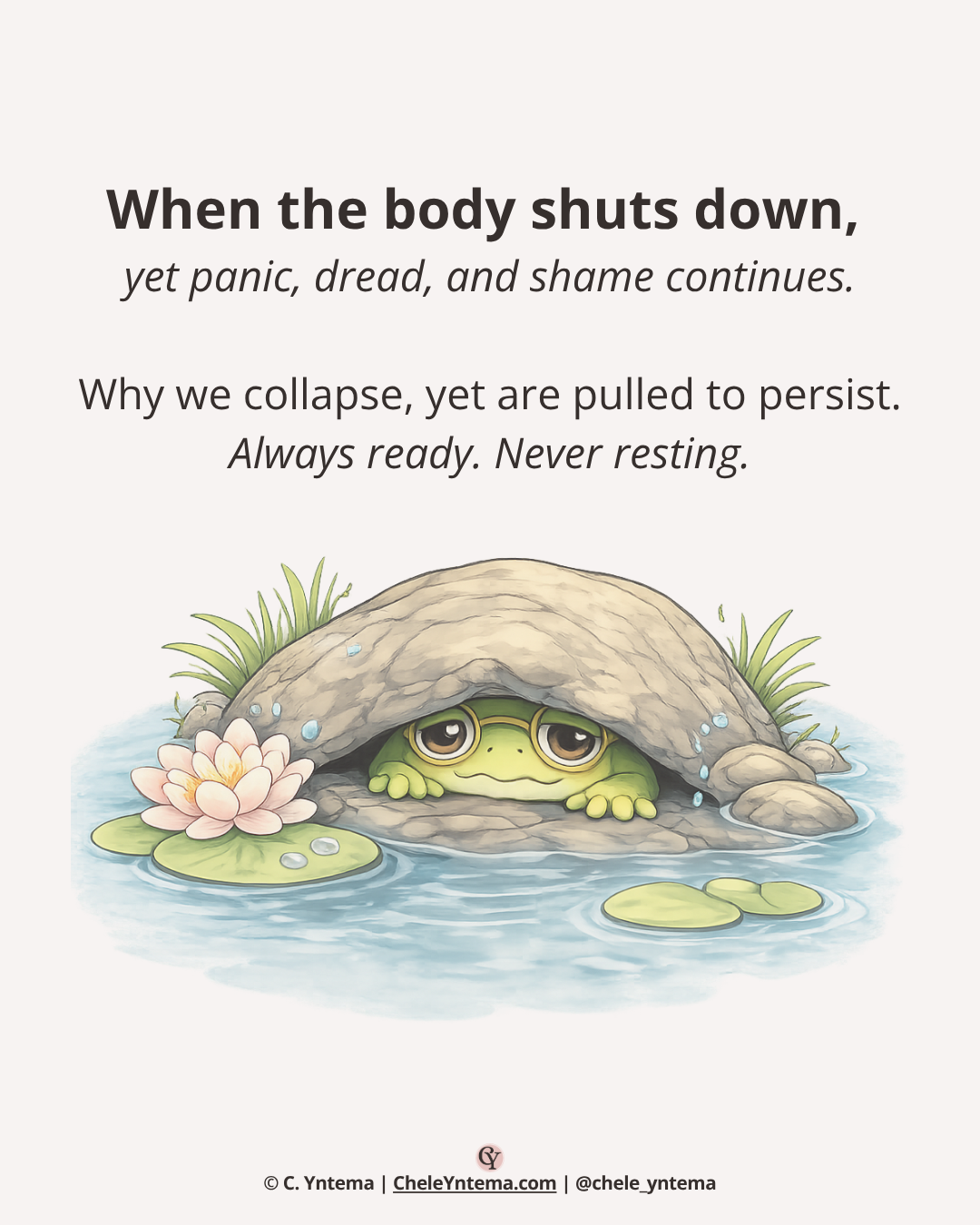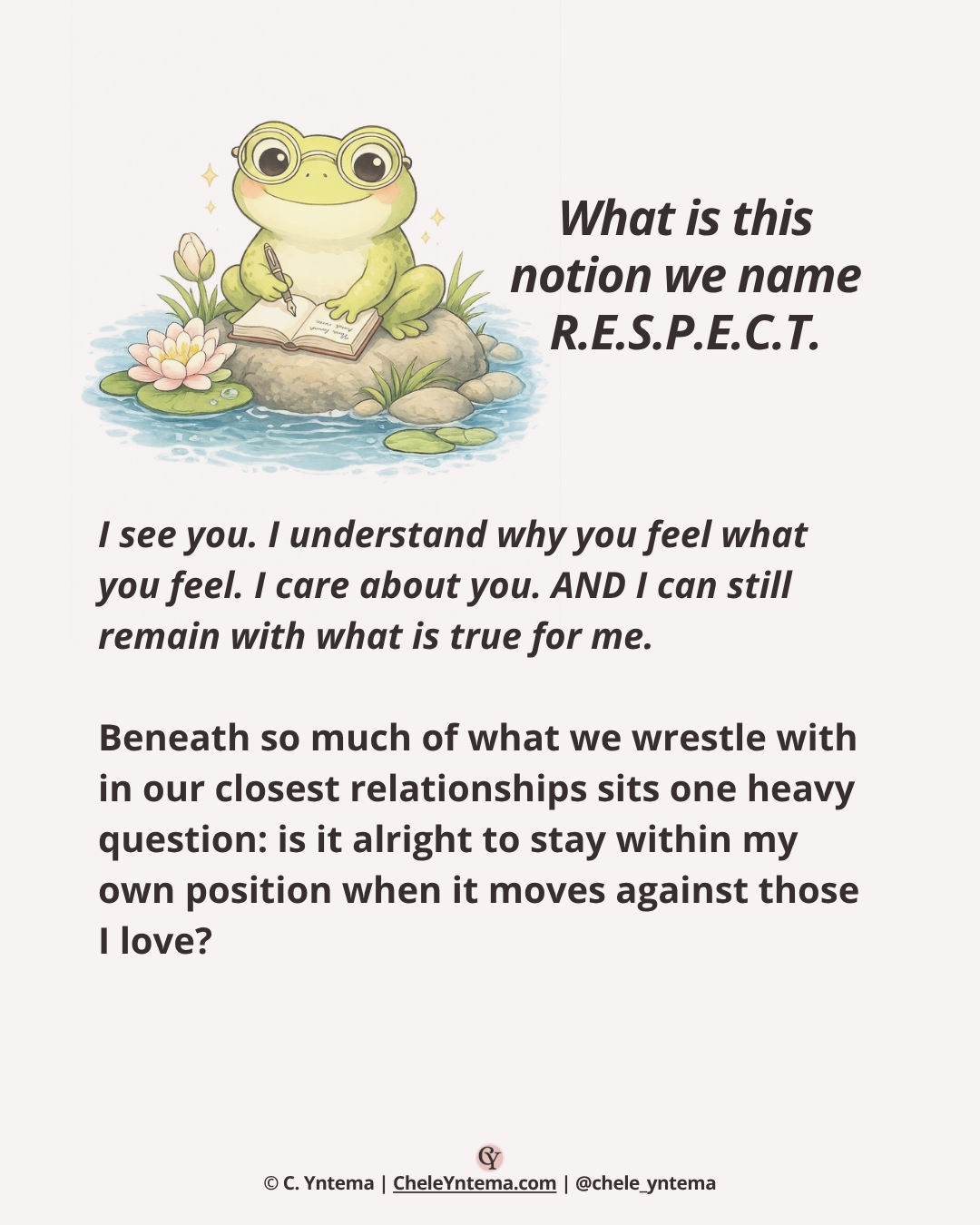

For when you feel lost

For when you feel lost Feeling lost can be one of the most disorienting experiences we move through, often arising in times of transition, loss, or exhaustion, or when the ways we have long coped begin to loosen.Our systems seek and sense, receive and perceive, and reach toward interpretation, searching for something that might help us make sense of where we are. When there is more than can be integrated at once, our systems may...Read More
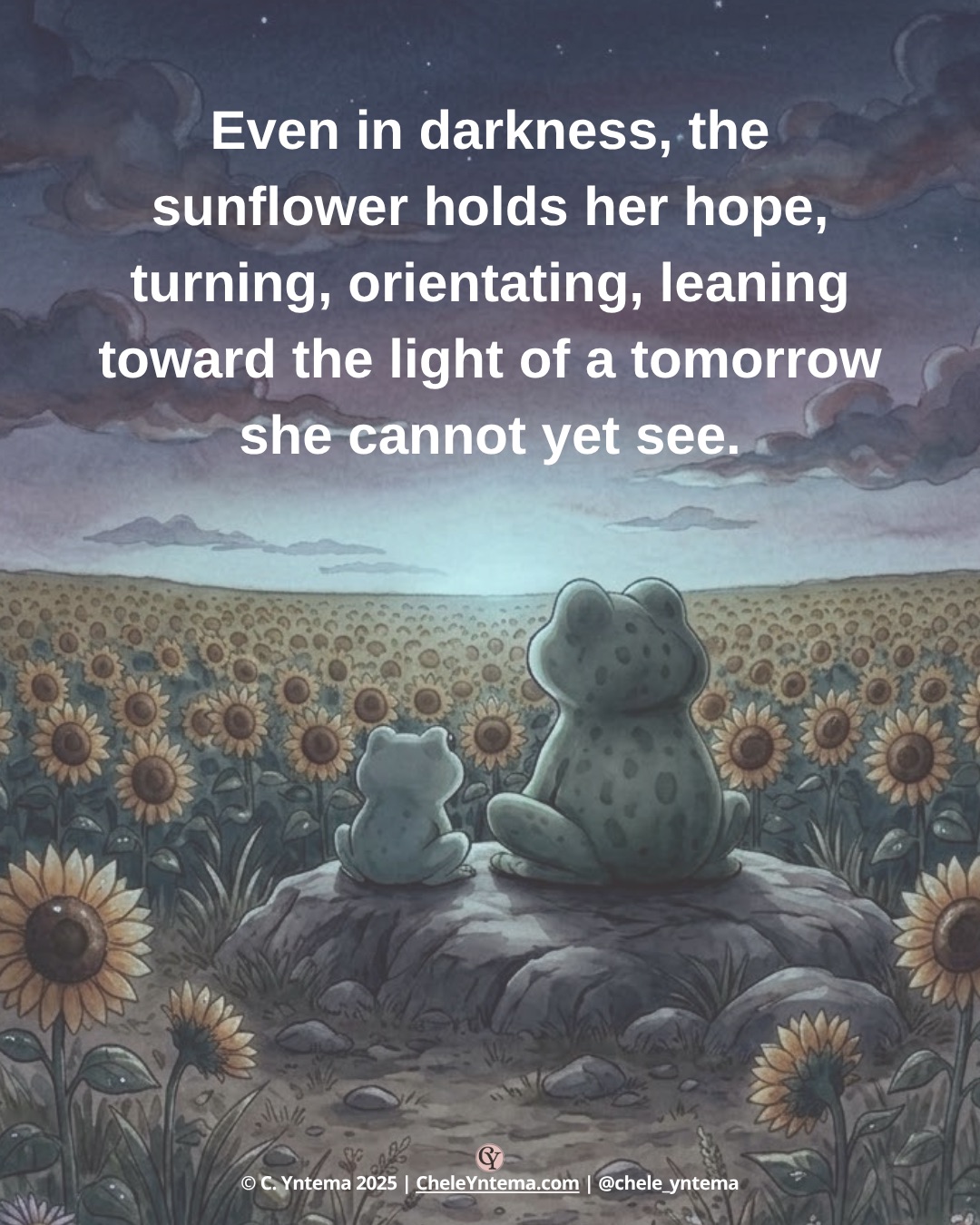
Even in Darkness…

Even in Darkness... All night the sunflowers turn east, together, toward a dawn not one of them can see. There is no sun to follow, no warmth to lean into, nothing at all to confirm that the morning will come. Still they turn, slowly, and all through the dark still hours an inward knowing steadies them toward what is not yet present. And when the light finally peers over the horizon, it finds them assuredly...Read More

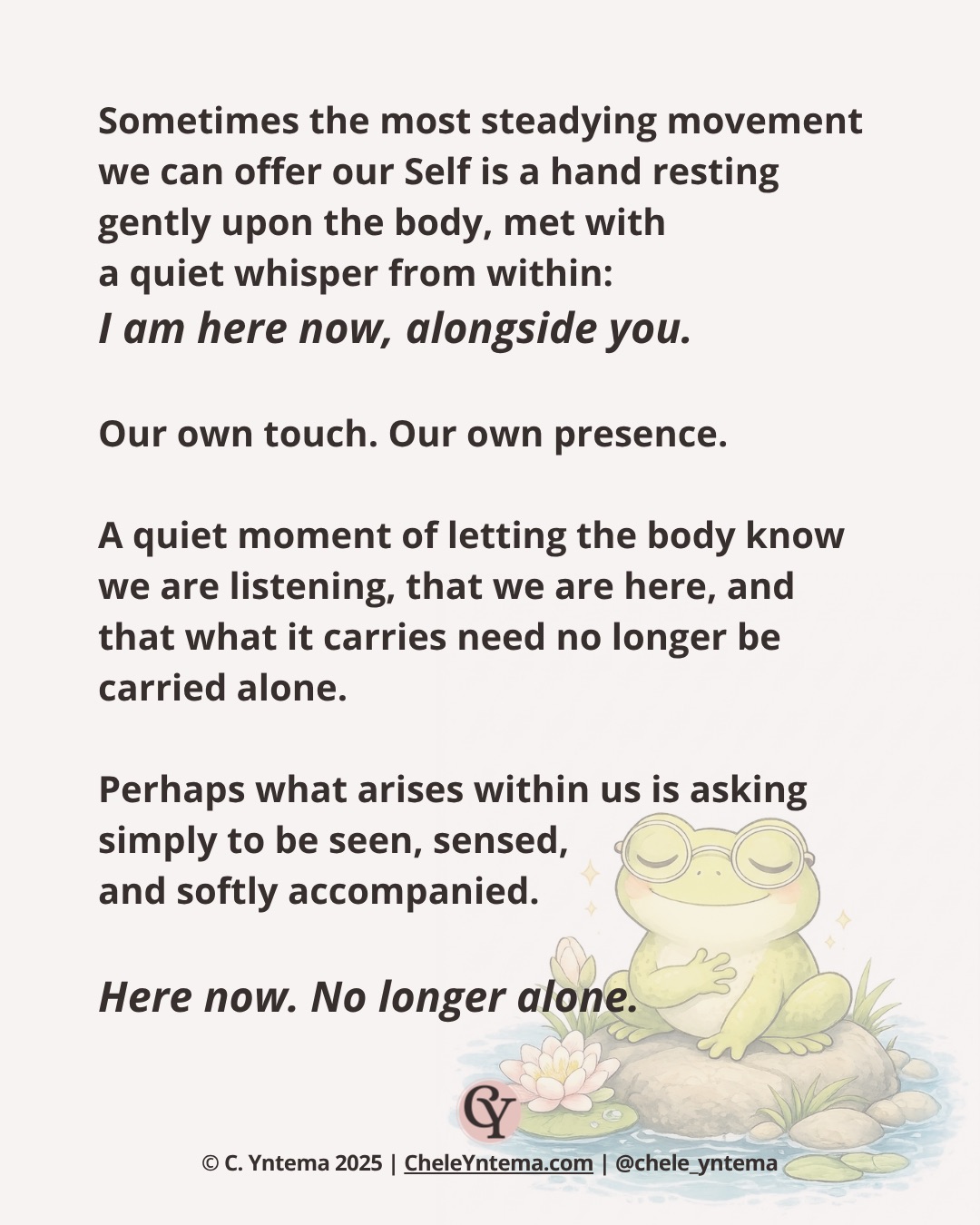
A Steadying Moment

A Steadying Moment So much of what moves within us arises long before we have words for it: a tightening across the chest, a heaviness in the belly, a restlessness searching for somewhere to settle. Often, without us even knowing, our systems are still bracing, still scanning, still readying for what once came and what may come again. There is a deepening sense of alarmed aloneness awakening from within.In these moments, sometimes the most steadying...Read More

The Monster in my Mind

The Monster in my Mind Fierce and frightened. Frightened and fierce.Many of us know something of the monster in the mind: the harsh inner voice, the relentless replaying, the shadowy sense of dread that looms larger the longer we meet it alone. Often it sounds certain, cruel, and convincing, repeating itself so insidiously that it can begin to feel like the truest thing about us.Perhaps the monster is also a protective pattern, formed in service...Read More

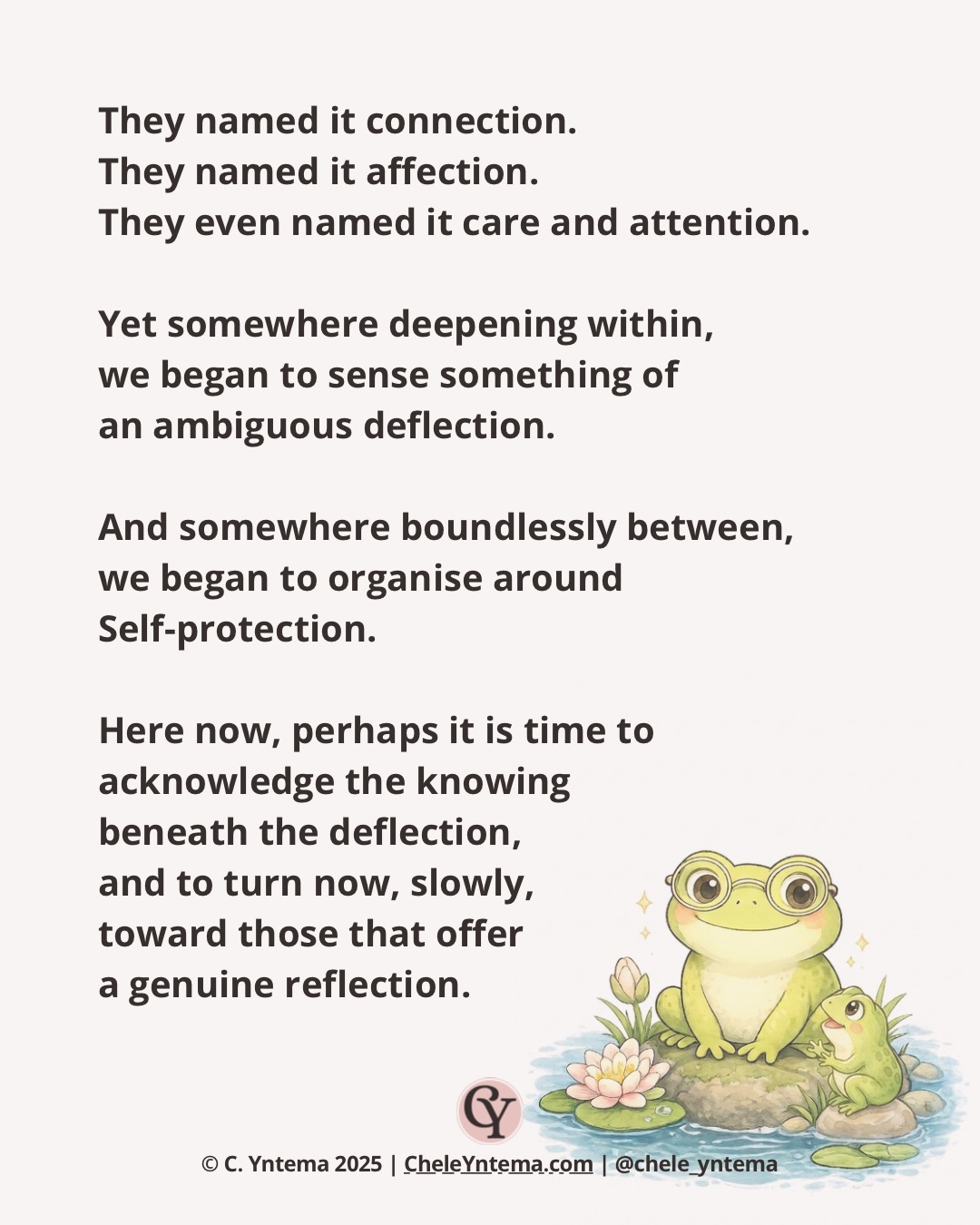
They named it connection…

They named it connection... Perhaps you have long sensed something of this, albeit without ever quite finding words for it.We might name this the trauma of ambiguous care. Not of what was there, rather of what was not there.Ambiguous trauma is the trauma of what was missing. It is the organisational residue of unmet needs, unspoken misattunements, and absence in the very moments when presence was most vital.Where developmental trauma and where neurodivergence is part...Read More

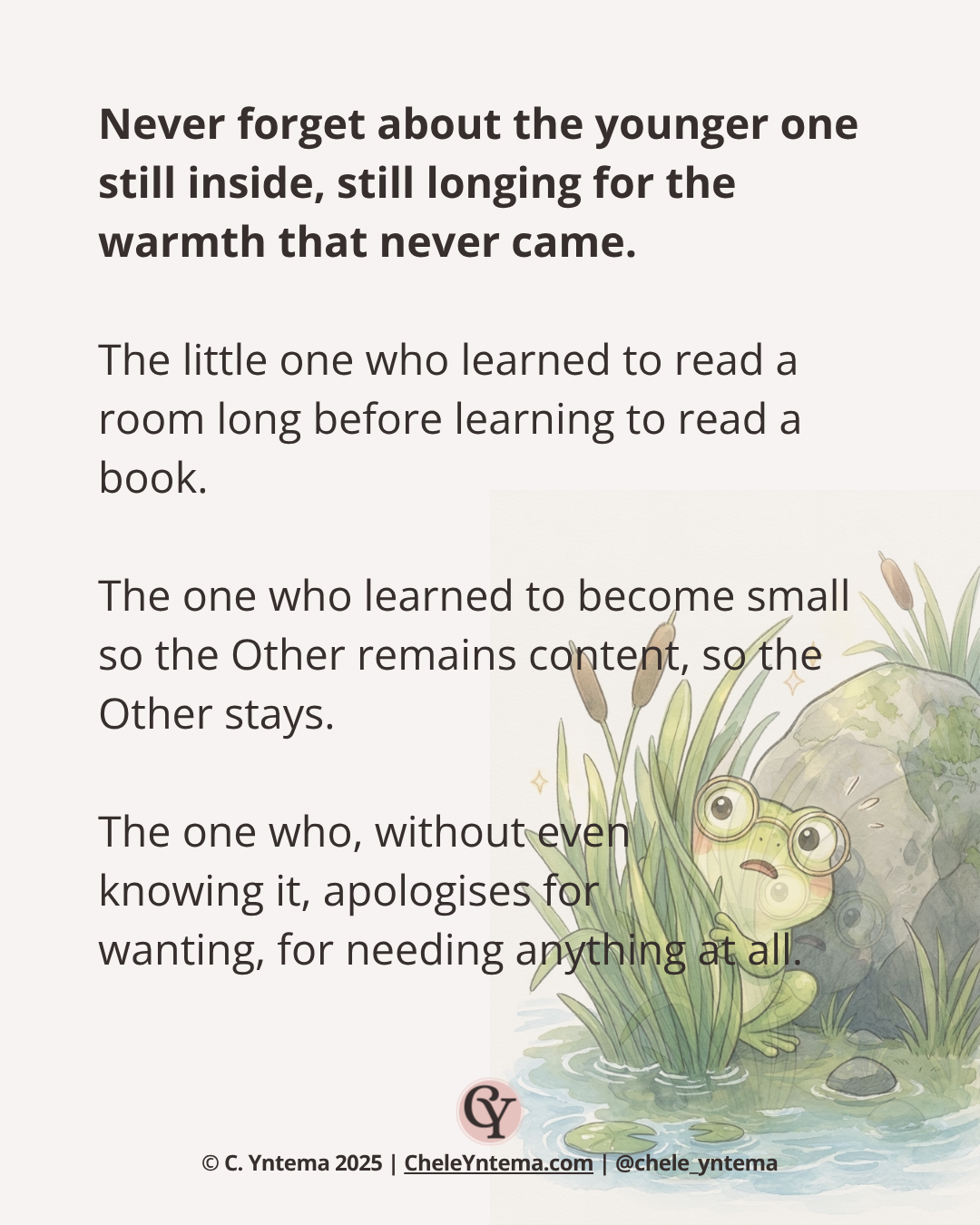
Never Forget

Never Forget Often it feels like we have a younger part of us still alive inside.Perhaps this is the part of us that learned, early on, when proximity meant survival, what it took to stay connected and protected by the Other. When care arrived inconsistently, or arrived only when we made ourselves easier to be near, our systems began to organise around that. We became watchful. We became accommodating. We became capable far earlier than...Read More

What if tomorrow is worse than today?

What if tomorrow is worse than today? Sometimes we lie awake in the evening, parts of us exhausted from the day that has been, whilst other parts swirl into the yet-to-come tomorrows, anticipating the what-ifs and preparing the how-tos.Often the swirls linger into the morning light, the worry of worse still residing deep within. It is in these times we are pulled to share our swirls, to seek a sense of certainty in an Other.Yet...Read More

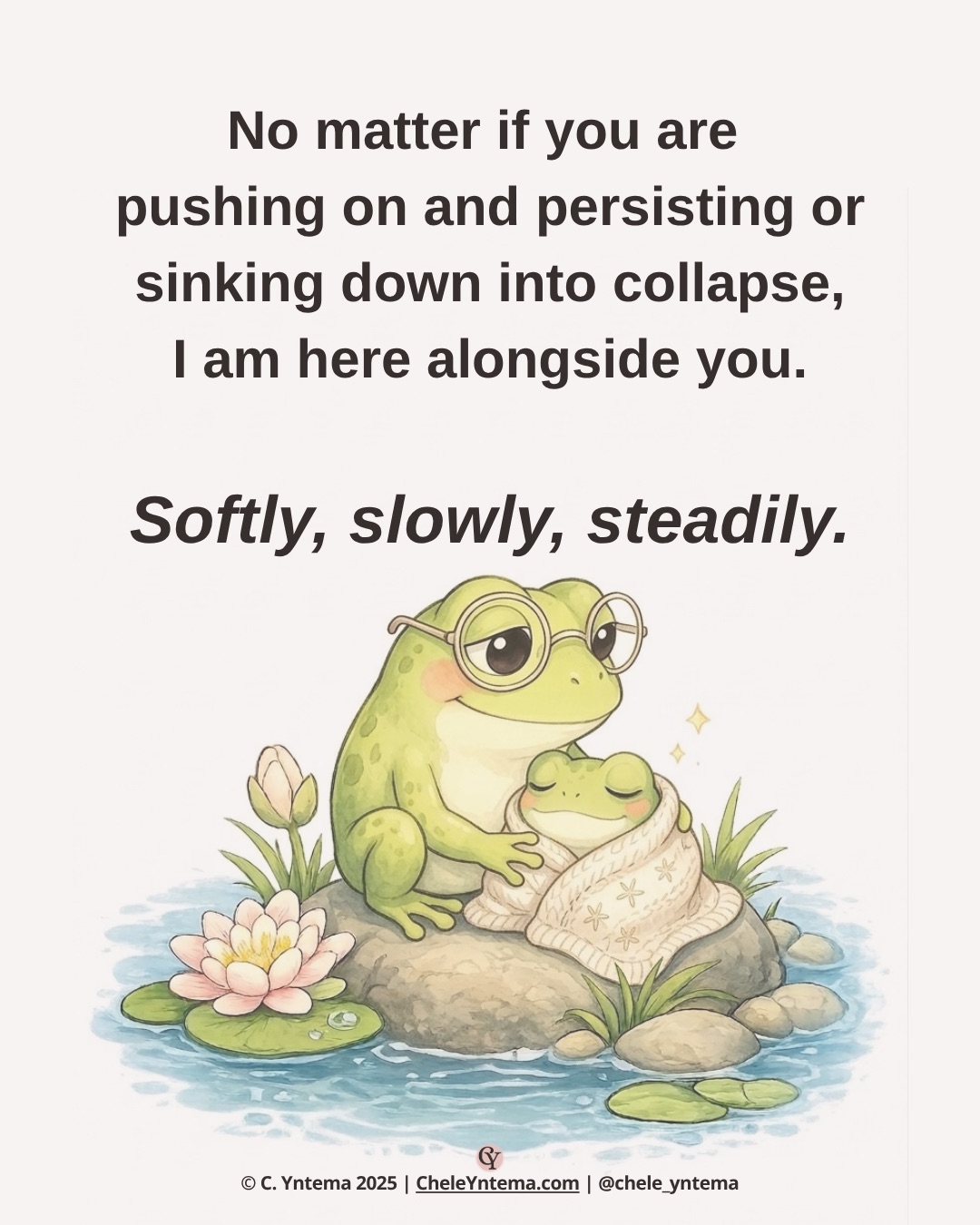
Persisting and Collapsing

Persisting and Collapsing When our systems are shaped early by prolonged volatility, and when turbulence remains ever possible, our experience organises into patterns of protection, or parts of us, that implicitly learned how to adapt and respond to Others and the World whilst keeping the Self safe.Parts of us move toward daily functioning and toward getting through, they feel the push to persist. These parts learned long ago how to push on and push through...Read More

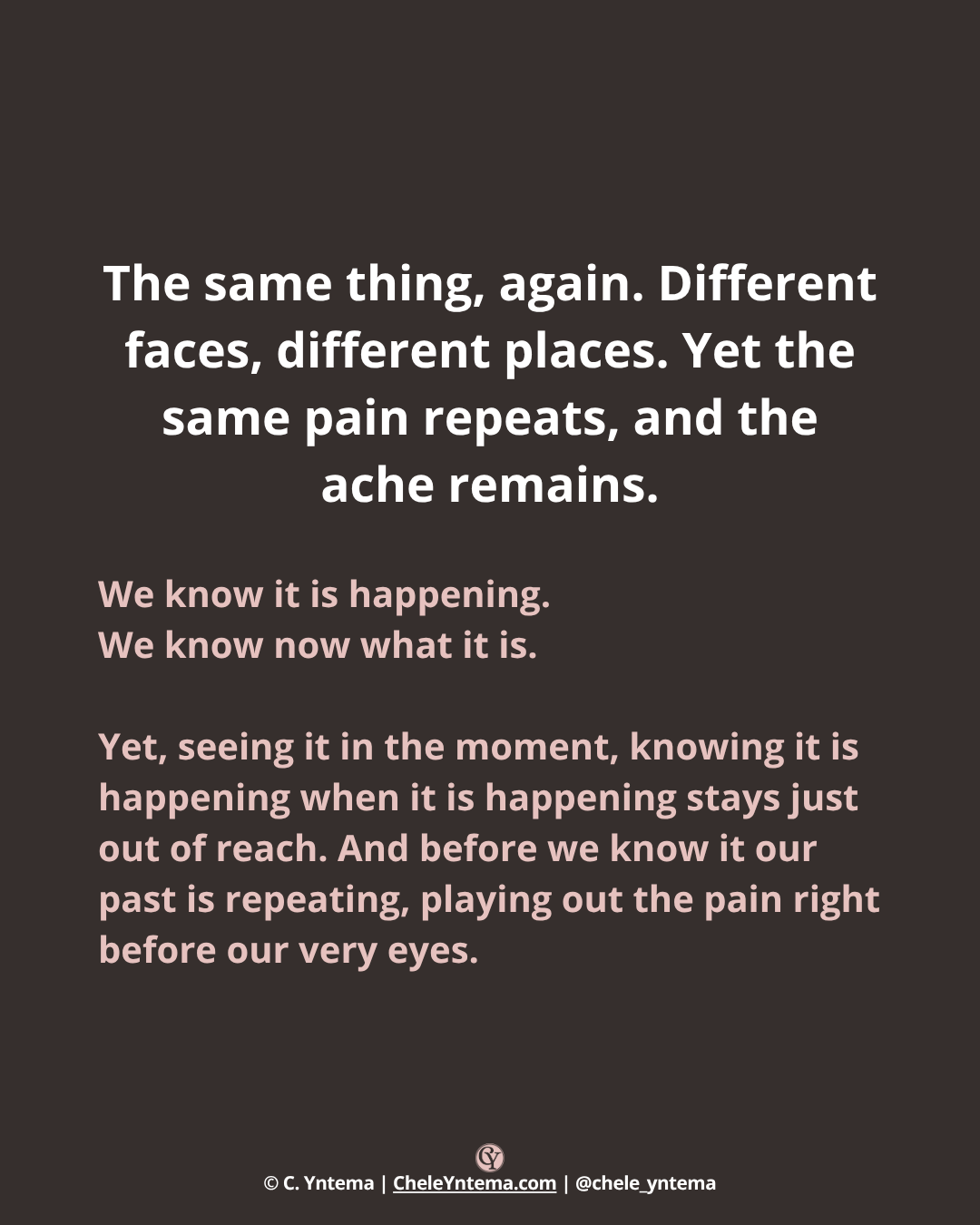
Reenactments

Relational Replays or 'Reenactments' Not again. Not this. Not with them too.There is a particular kind of heaviness that comes when be begin to sense the past repeating itself. The moment we see the pattern clearly, and see also that we are already inside it, already moving in the way we have moved before, already feeling the old ache take shape in a room full of new people.It is here that we tend to turn...Read More

When the Body Shuts Down

When the Body Shuts Down Perhaps you know the sort of exhaustion that sleep does not touch.Perhaps you have taken the week off and found that the rest restored nothing, or that stopping felt worse than continuing, and something within you began to hum with a pressure you could not name.Certainly this is confusing. We are told to rest, to slow down, to be gentle with ourselves, as though the stopping were freely available and...Read More

Respect

Respect and Recognition I can see you. And I can remain with what is true for me. So much of what we wrestle with in our closest relationships sits beneath one question. Is it alright to stay with my own position when it moves against those we love? Many of us learned young that respecting someone meant agreeing with them, going along, keeping their pain away. Our systems organised around this adaptively and well. Agreement...Read More

A woman sits by a window at dusk, looking into the distance, evoking ambiguous loss.

Ambiguous Loss: When Someone Leaves Without a Why

Alone in the darkness the silence is deafening. You are surviving, yet deep within there is a silent suffering that no one can see. No one can see the emptiness within, as you mask the abyss of loneliness. No one knows the chasm of confusion and overwhelm. No one understands the elusive spiral of self-criticism, self-doubt, and self-blame; of never-enough-ness or of always-too-much-ness. This is your hidden heartache of seeking and never quite finding the...Read More

A woman curls inward as soft light reaches toward her from a doorway.

The nature of shame: connection, protection, and the fracturing of Self


Shame is the affect of indignity, of defeat, of transgression and of alienation. Though terror speaks to life and death and distress makes of the world a vale of tears, yet shame strikes deepest into the heart of man. Silvan Tomkins The nature of shame: connection, protection, and the shattering of Self Shame. The world speaks to it often, wrestling with something that is at once a soul shattering affect and a living toxicity that...Read More
Two trees stand apart, their branches meeting gently at the tips.

The Battle of Needs Negotiation: Boundaries

At the heart of an integrated sense of Self with significance and belonging is the capacity to both differentiate and connect. Such differentiation and connection are founded in our ability to know our own inner worlds as unified yet unique with meaning, value, and worth. Chele Yntema Creating a Boundaried sense of Self: Differentiated yet Connected So, what exactly does it mean to be differentiated yet connected, to be boundaried interpersonally in the manner by...Read More
A figure seen through layered frosted glass, softening into mist.

Dissociation and complex trauma: the spectrum of protection

The self is born in a moment of empathic relatedness, and it can die too, in the absence of human responsiveness. Russell Meares Understanding dissociation and complex trauma: a spectrum of protection As we move through life there can be these unexplainable encounters within the continuity of our embodied sense of Self. Like a dream they are there, yet they can be hard to grasp, to ground, to bring into any bounds of seeming sense....Read More

The Rhythm of Attachment: How we come to be with Self, Other, and World.

Attachment is not only about relational patterns; it’s the interactive regulation of emotion and arousal between two minds and two bodies. Allan Schore The Rhythm of Attachment: How we come to be with Self, Other, and World. To speak of attachment is to speak of one of the most fundamental rhythms of human life. It is the core of survival that lives within our earliest experiences of connection and separation – of reaching, settling, being...Read More

Neuroception

Our bodies listen before we do — scanning the silence for threat or safety, shaping our way of being in the world before a single thought is formed. Deb Dana What is Neuroception? There are aspects of our lived experience that we struggle to name, a knowing from deeper within; a shifting and a swirling, an innate attunement to what we sense arising around us and within us. Such is an embodied, emergent process coined...Read More

When “trouble” feels annihilating: Neurodivergence, complex trauma, and the fear of getting in trouble

It is a joy to be hidden and a disaster not to be found. D.W. Winnicott When “trouble” feels annihilating: Neurodivergence, complex trauma, and the fear of getting in trouble For some of us, growing up in a world of chaos and confusion isn’t just inconvenient or uncomfortable. It is desolate. This begins in a divergent system that was always a little more permeable. We are, our internal systems are, innately wired to register tone,...Read More

Responsibility and Accountability in Relationships: Intention, Impact, Rupture, and Repair

The curious paradox is that when I accept myself just as I am, then I can change.” Carl Rogers Responsibility and Accountability in Relationships: Intention, Impact, Rupture, and Repair We often refrain from speaking to the nuances in our language – yet perhaps it is within these missing details that our shared meaning goes amiss. How many times do we feel a deepening sense of being misunderstood? Where, no matter the language we use, the...Read More

When Support Hurts: Anticipatory Attunement, Anger, and Collapse

To be known is to be recognised as existing. Allan Schore When Support Hurts: Anticipatory Attunement, Anger, and Collapse There is a familiarity to certain relational interactions, an irritation that is not just an annoyance with the Other but a tight, hot swirl pushing and pulling in a tug between reasonable and unreasonable expectations. Often this irritation shows up as a fiery fusion of wanting support, finding the courage to request support, and then being...Read More

Verbal processing: why using many words can feel safer

Thought is not merely expressed in words; it comes into existence through them. Lev S. Vygotsky Verbal processing: why using many words can feel safer Have you ever noticed that sometimes there are those of us with a tendency to be quite talkative? Perhaps there is a part of you that enjoys using words, and another part of you that worries this talkative part might be taking up too much space, that Others are tuning...Read More

The embodied and relational Self in context

Who are we really? And what does it mean when we say, “this is me”? What is the “this” that we call “the self”? And why are so many studies revealing that in our modern life people are feeling ever more isolated even though they are more digitally connected? How can we be “together” yet feel so alone? One way of understanding this is that a sense of a “self” is being created from our...Read More

On attachment in the therapeutic relationship: Attachment to your therapist

We do not grow out of our need for relationship; rather, we grow into ourselves through relationship. Bonnie Badenoch On attachment in the therapeutic relationship Have you ever wondered to yourself, why do I want to talk to my therapist so desperately? Am I too attached, am I becoming too much, leaning too far in, relying too heavily? I want to assure you that, at some point in the work, there is often a relational...Read More

Cognitive Dissonance and Attachment in Coercive Control: A Relational, and Neurobiological Exploration

Integration is the linkage of differentiated parts into a coherent whole. Daniel Siegel Cognitive Dissonance and Coercive Control: A Relational and Neurobiological Exploration In the previous pieces, we stayed close to the lived experience of contradiction, exploring the fragmenting fog that can arise when care and fear coexist within relationship, and the many ways our systems adapt to preserve connection when safety feels uncertain. This third offering turns gently toward the deeper organising process often...Read More

Cognitive Dissonance and Coercive Control: How We Protect Connection When Safety Is Uncertain

When relational experience is chronically unpredictable, the mind does not fail to integrate; it adapts by organising experience in ways that preserve attachment and emotional survival. Allan Schore Cognitive Dissonance and Coercive Control: How We Protect Connection when Safety is Uncertain In the previous piece, we explored the fragmenting fog of contradiction, the embodied confusion that can arise when care and fear coexist within relationship. We traced how relational unpredictability unsettles our sense of Self,...Read More

The Fragmenting Fog of Contradiction: How Coercive Control Disrupts Knowing and Protects Connection

Coercive control is a pattern of domination that works to erase a person’s freedom and sense of Self. Jess Hill The Fragmenting Fog of Contradiction: How Coercive Control Disrupts Knowing and Protects Connection There is a stirring within. A tension that moves quickly from the belly to the brain, a flood of fear, an overwhelming panic that rises and crests before shifting into a fog of fuzzy numbness. It is a spontaneous transition, where contact...Read More

Disgust: The Boundary Emotion

Disgust is a boundary psychology. Disgust marks objects as exterior and alien Richard Beck Disgust: The Boundary Emotion Disgust, it is the ick of the Self, the embodied cry of “This must not come near.” To be human is to know this sudden, deep, and visceral recoil; the way the body folds back from what it senses as intrusion or threat. We know it in the tightening of the throat, the knotting of the stomach,...Read More

Why Your Brain Loves Curiosity

The SEEKING system is the grand architect of our emotional lives, propelling us toward everything we desire, including knowledge. Jaak Panksepp Why Your Brain Loves Curiosity. Curiosity is not a luxury. It is not something reserved for the intellectually inclined or the inquisitive few. It is a deeply embodied capacity that lives in all of us – an emotional motivational force that seeks connection, collaboration, and completion for contextual coherence. When we are curious, something...Read More

Emotional Flashbacks: Understanding the Push and Pull Inside.

When something within us awakens, we return. Then-and-there moves through the here-and-now. The alarmed aloneness that once had no response reaches again toward an Other, toward connection, toward what was not available the first time. Inspired by Joanna Lindenbaum When Connection Feels Unsafe: The Push-Pull of Emotional Flashbacks A reflection on the inner conflict between longing and fear, and how coming to know our own embodied language of safety can soften the protective patterns formed...Read More

Why We Seek Meaning: Exploring the Drive to Understand Self and Other

Be patient toward all that is unsolved in your heart and try to love the questions themselves. Rainer Maria Rilke Why we seek to know the knowing of the known: The quest to understand Self and Other What is it within us that drives us to know, to understand, to unfold the why and the how of our Self, of Others, and of the World around us? It almost seems a paradoxically redundant question, for...Read More

Embodied Relational Knowings

The body remembers what the mind forgets. It holds the story of love, of lack, of longing — not in words, but in gesture, in posture, in silence. Author Unknown Embodied Relational Knowings Have you ever reacted in a certain way with others that seemingly happens no matter how hard you try to change it?Appeasing or people-pleasing; distancing or doubting; shrinking or shielding?These may be embodied relational knowings - patterns of Self-protection that you implicitly...Read More

Understanding the Window of Capacity

You do not have to be good.  You do not have to walk on your knees for a hundred miles through the desert, repenting.  You only have to let the softness of your body love what it loves. Mary Oliver, from Wild Geese What is the Window of Capacity? An Introduction Also referred to as the window of tolerance, the window of capacity speaks to the dynamic range of affective arousal we can move within...Read More

The Unbeknownst of Shame Part Two: Cultivating Resolve by Bringing Clarity to Confusion and Trust to Doubt.

We cultivate love when we offer our most vulnerable selves, the selves that hold shame, to be deeply seen and known, and when we honor the spiritual connection that grows from that offering being met with trust, respect, kindness and affection. Love is not something we give or get; it is something that we nurture and grow, a connection that can only be cultivated between two people when it exists within each one of them...Read More

The Unbeknownst of Shame Part One: What is Shame?

Alone and exposed. Exposed and alone. My very being unwanted as she was. Instead, misunderstood and abashed. Denigrated. Disparaged with blame… There was but a shadow of who I once knew. Alone and exposed. Exposed and alone. Hollowed, emptied of all that was left of me. There was nothing there for me, not then, not now, not ever. They had taken my vulnerability and torn it to shreds, leaving me barren of protection. Stripped of...Read More

Window of Capacity

Breathing in, I calm body and mind. Breathing out, I smile. Dwelling in the present moment I know this is the only moment. Thich Nhat Hanh An Introduction: what do we mean by Capacity? Have you ever been introduced to the Window of Tolerance?  It is a concept that was originally developed by the psychiatrist Dr. Dan Siegel as a way of conceptualising that our nervous systems each uniquely hold a band of optimum functioning...Read More

Co-dependency as an Emergent Response to Enmeshment

We being life, as babies, needing connection for survival, and we take adaptations we've learned from those attachment experiences out into the world of interpersonal relationships. Learning to be a "we" in our personal family of origin may directly impact our experience of widening our lens of identity to embrace a larger set of relational connections - belonging to others in romance, friendship, community, and the world of nature. We come from the inner Me,...Read More

Helpful (true) Guilt & Unhelpful (false) Guilt

Think about a time you felt guilty. What made you feel this guilt? What impact did guilt have on you? How did you respond? Probably, your description of the cause starts with an 'I….'. This is because guilt is linked not with an external event, but with our own behaviour, a sense we've done something we shouldn't, or not done something we should've. This makes guilt more complicated than some other emotions, because we have...Read More

The Value in Emotion – Processing

Integration leads to optimal regulation... In essence, "emotional regulation" is how we use our minds, bodies, and relational processes to enhance integration. To achieve regulation, an integrative state of coherence, in the moment and across time, the mind both monitors and modifies the flow of energy and information to differentiate and link that flow internally and interpersonally. What this means is that processes linking differentiated elements of a system - within or between individuals -...Read More

The Value in Emotion – Understanding

The ability to involve conscious processing with something as fundamental as the creation of meaning, social relatedness, and perceptual processing certainly does give us an increase in the flexibility of our responses to the environment. Having a consciousness of emotions is especially important in the social environment. Without it, we are likely not to be aware of our own or others' intentions and motives. Awareness of emotional processes, our shifts in integration, has value for...Read More

Patterns of Self-Protection: Attachment vs Authenticity

Hope is not wishful thinking, but a realising of the possibilities beyond the actualities we now experience ... With hope we can find a path forward ... With hope we have courage ...  Dr. Dan Siegel, 2023 An Introduction: A Confusion from Within Are there times in your life when you find yourself in connections, conversations, collaborations, or relational dynamics that leave you feeling like you could not show up as your authentic Self?  For many...Read More

Caring for the Young Carer

This post was originally written for an interview with Wellways - you can read their article here Years ago, as I began my career in mental health and well-being, I had never truly pondered on the significance of the developing mind, let alone on its paradoxical complexity. Yet, as we begin another New Year and as I sit here in the space that is known in the Wellways Brisbane office as the ‘Green Room’ looking...Read More

Finding your Self in the Midst of Chaos

Breath is the bridge which connects life to consciousness, which unites your body to your thoughts. Whenever your mind becomes scattered, use your breath as the means to take hold of your mind again. Thich Nhat Hanh Amid the chaos of life, there may be moments of overwhelm - swirls of confusing emotions that seem to take over. It is in those moments, when our minds become scattered that we may need to stop.  And...Read More

For the Invisible Ones

A beautiful composition that speaks with heart to the lasting impact of childhood neglect, and the courage of one woman to create change. For the Invisible Ones by Aven Harper "Emotional and relational absence in childhood takes many forms and has a wide range of impacts. This short film describes the singular experience of being an ‘ignored child’. There is a great deal more to emotional neglect than is shown in this video. It comes...Read More

Functional Fundamentals – Fundamental Nature of Self & Other Experiencing in the World

MIND BODY CONNECTION & the Functional Fundamentals of Humanity Without a theory of human beings there can be no theory of psychotherapy. Lapworth & Sills, 2010 Fundamental Nature of Self & Other Experiencing in the World Whilst I share my fundamental belief in the Divine herein, I do not subscribe to inflicting my views or perspectives on Others - we each have the choice to believe as we desire. Imago Dei: Created in Divine Image...Read More

Functional Fundamentals – Fundamental Constitution of Self

MIND BODY CONNECTION& the Functional Fundamentals of Humanity Nothing can cure the soul but the senses, just as nothing can cure the senses but the soul. Oscar Wilde Fundamental Constitution of Self It is important to ground psychotherapies on a knowledge of affective processes and thereby to understand how to most effectively recruit beneficial cognitive perspectives. Panksepp and Biven, 2012 As we become more aware of what it means to be human and the fundamental...Read More

Functional Fundamentals – Defining Wellbeing & Suffering

MIND BODY CONNECTION & the Functional Fundamentals of Humanity The attempt to escape from pain, is what creates more pain. Gabor Mate Defining Wellbeing and Suffering When we appreciate the fundamental nature of human experience and the fundamental constitution of Self as it relates to Other(s) and the World we can begin to appreciate more fully what it means to be well, what it means to suffer, and why as humans we seek connection to...Read More

Framework Fundamentals – Co-Regulated Connection

MIND BODY CONNECTION & the Therapeutic Fundamentals of Practice When we are held in safety by another’s non-judgmental receptivity, we naturally open to more awareness of sensation, feelings, and the thoughts that arise from and accompanying them.  The stability of our joined windows of tolerance makes what was intolerable and necessary to ignore available for awareness and disconfirmation.  In the process, the circuitry of regulation develops more strength as our community gains another dyad for...Read More

Framework Fundamentals – Compassionate Collaboration

MIND BODY CONNECTION & the Therapeutic Fundamentals of Practice Outcome is enhanced when the therapist uses modalities and defines goals consistent with the life experiences and cultural values of the client. No single approach is equally effective across all populations and life situations Collins & Arthur, 2010 Compassionate Collaboration Compassionate Collaboration is the Self (therapist) instigated and Other (client) agreed upon use of the emergent energy and information flow that exists within the micro-World of...Read More

Framework Fundamentals – Contextual Coherence

MIND BODY CONNECTION & the Therapeutic Fundamentals of Practice When a person is in a more coherent state there is a shift in the relative autonomic balance toward increased parasympathetic activity (vagal tone), increased heart-brain synchronization and entrainment between diverse physiological systems. In this mode, the body’s systems function with a high degree of efficiency and harmony and natural regenerative processes are facilitated. McCraty, 2015 Contextual Coherence There is nothing more encapsulating than the seamless...Read More

The Embodied and Relational Self in Context

Who are we really?  And what does it mean when we say, “this is me”?  What is the “this” that we call “the self”?  And why are so many studies revealing that in our modern life people are feeling ever more isolated even though they are more digitally connected?  How can we be “together” yet feel so alone?  One way of understanding this is that a sense of a “self” is being created from our...Read More